Interdisciplinary modules
built for the living classroom.
Living History curriculum connects history with the disciplines students already use to make sense of the world — from journalism to theatre, financial literacy to visual arts.
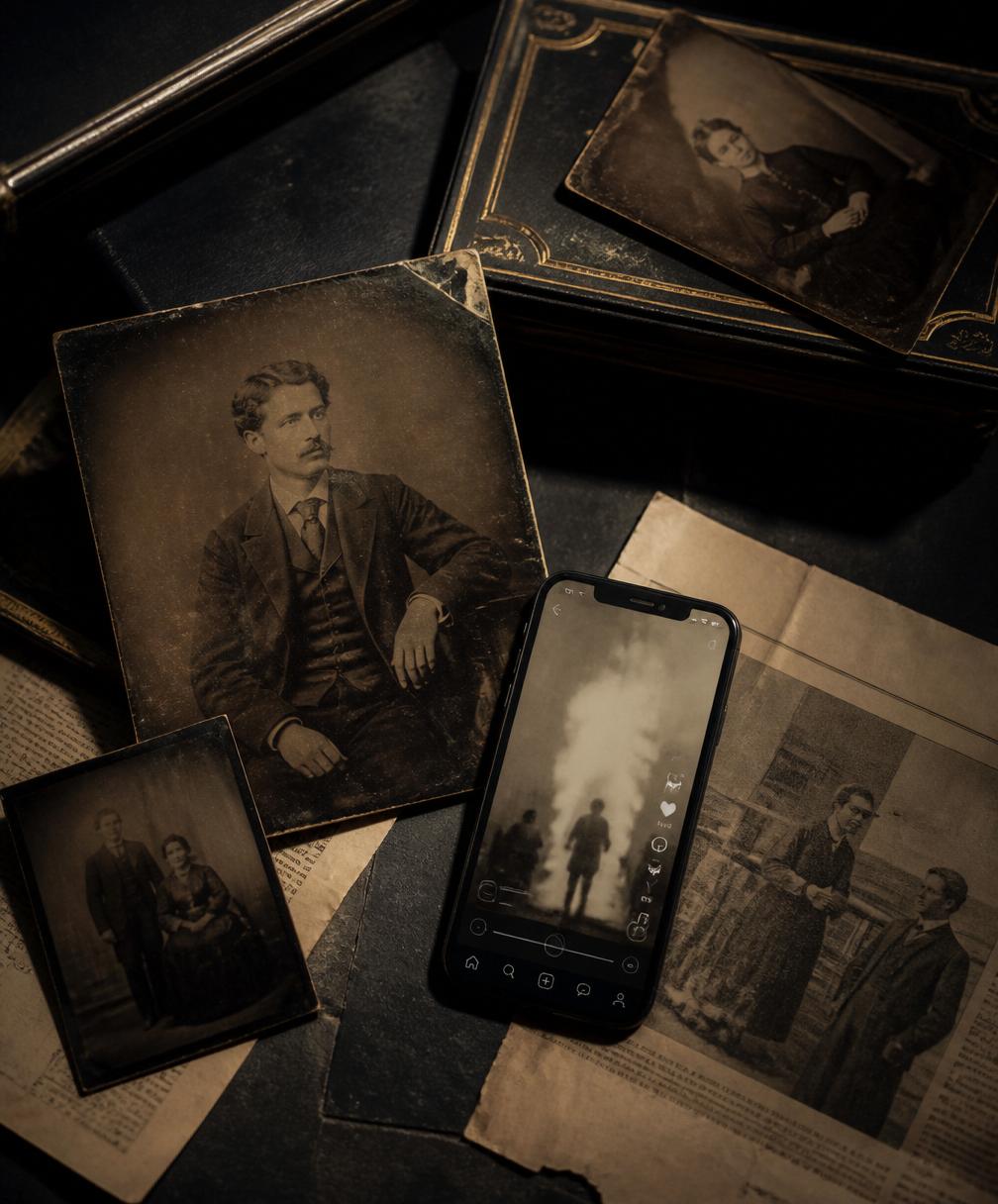
Freedom Interrupted.
An interdisciplinary inquiry module that invites students to investigate how the Compromise of 1877 reshaped American democracy and why its legacy still matters today.
“If 1877 had TikTok, what would it say?”
Developed through the Entertainment Community Fund Teaching Artist Program and successfully piloted in a Southern California independent high school classroom, where students explored history through storytelling, inquiry, and primary sources.
Inquire About LicensingHistory as the connective tissue.
The framework is adaptable from Kindergarten through higher education, and into museums, libraries, nonprofits, and community organizations.
Every module is built for inquiry and customization.
Instructional guidance for inquiry-based learning.
Every module includes instructional guidance, historical context, discussion prompts, implementation suggestions, and extension activities.
Students as investigators, storytellers, and makers.
Students investigate history through primary sources, storytelling, writing, discussion, media creation, and reflection.
Visual tools for inquiry and discussion.
Ready to use visuals that support inquiry, discussion, and collaborative learning.
History from the source.
Students work directly with speeches, testimony, photographs, letters, newspapers, government records, and archival collections to investigate history for themselves.
Assessments that value thinking, not just recall.
Flexible assessments emphasize historical thinking, communication, inquiry, collaboration, and evidence based reasoning rather than memorization alone.
Flexible licensing for your organization.
Living History can be licensed by schools, districts, museums, libraries, and educational organizations with optional professional learning for faculty and instructional leaders.